
Decide how important TV viewing is in this room
If television is the room’s main activity, it deserves a clear role in the layout. If it is occasional, the room may work better when conversation, daylight or another use has equal priority.
Name the main activity before choosing the screen wall. That keeps the television from becoming the default answer to every layout question.
List the fixed constraints around the screen
Check power and connection points, windows, doors, built-ins and any fixed furniture before choosing a TV position. Notice where daylight or lamps may create glare and whether a door or route repeatedly crosses the viewing area.
This is a practical comparison, not an electrical or mounting-safety assessment. Follow manufacturer instructions and appropriate professional guidance for wall mounting or electrical work.
Position the main seat, then trace movement
Place the main seat in the position that best supports the priority viewing arrangement, then trace how people enter, leave and cross the room. A technically good view can still be frustrating if every journey passes between the screen and the seat.
If that happens, compare another sofa orientation or another screen location rather than solving the problem with smaller furniture alone.
Keep secondary seating useful
Additional chairs do not need the same viewing angle as the main seat, but they should still support the way the household uses the room. Check whether a chair blocks a route, turns its back on conversation or must be moved every time the TV is used.
For sofa-specific placement questions, use the sofa-position guide.
Compare viewing with doors and windows
A screen location that avoids one problem can create another. Moving it away from a window may put it beside a doorway; centering it on a wall may force the main route through the seating area.
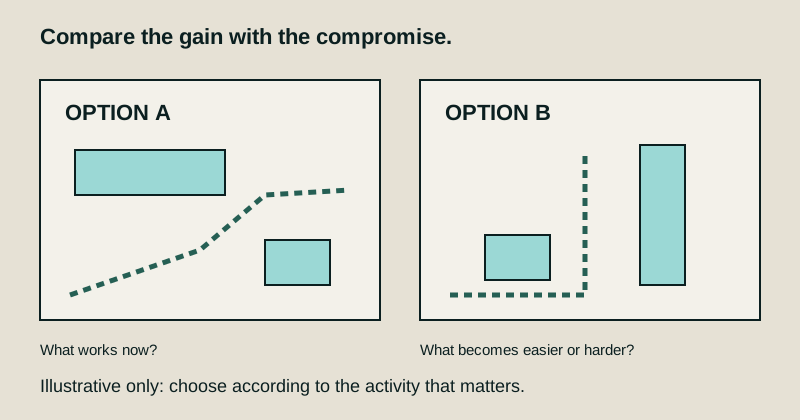
Record the trade-off explicitly. The useful question is not “which wall is best?” but “which arrangement best supports the activities and routes that matter here?”
Test the layout before committing
Use tape, a temporary screen-sized marker or a sketch to compare positions before drilling, buying furniture or changing cabling. Sit in the places people will actually use and repeat the main routes through the room.
Where measurements affect the decision, use the room-measurement guide and preserve uncertainty instead of guessing.
When TV placement exposes a wider layout problem
If every screen position creates a new conflict, the room may have several competing constraints rather than one TV problem. Use the awkward living-room layout guide to compare the whole arrangement.