
Start with what the sofa needs to support
Decide what the sofa is mainly for in this room: conversation, television, reading, a view, or a combination of activities. The best position is the one that supports the priority activity while preserving the routes and openings the room needs.
Do not begin with a rule that the sofa must sit against the longest wall. That wall may be useful, but it is only one option to compare.
Mark doors, windows and fixed features first
Sketch the room’s openings and fixed features before moving the sofa on paper. A position that looks balanced can still interfere with a doorway, radiator, storage access or the route to another room.
Include the space people use when opening doors or walking behind the sofa. Empty floor elsewhere does not compensate for a blocked route where people actually move.
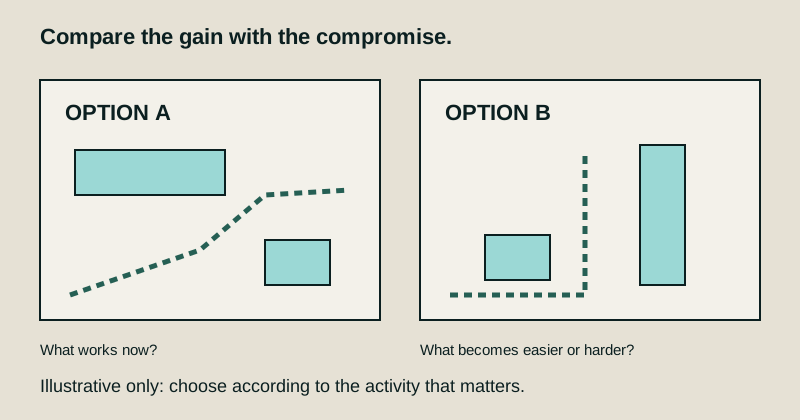
Compare wall placement with a floating position
Putting the sofa against a wall can preserve central floor area, especially in a compact room. Pulling it away from the wall can define a zone or create a route behind it. Neither choice is automatically better.
Sketch both when the room allows. Compare what each option does to movement, the main activity and the furniture that must still fit around it.
Check the view and the conversation at the same time
If the sofa faces a television, fireplace, window or another focal point, check whether that orientation also works for conversation and access. A strong visual alignment can still create an awkward route or isolate another seat.
If television use is the main constraint, use the living-room layout with TV guide to compare viewing and movement together.
Test the route around the sofa
Walk the common paths through the room and notice whether the sofa creates a narrow turn, dead end or repeated detour. If the route is the main issue, use the traffic-flow guide to separate the blocked path from the furniture you suspect is causing it.
Measure only when the decision depends on it
If two sofa positions both look workable, measure the specific gap or wall segment that could decide between them. Record the sofa’s true footprint, including projecting arms or chaise sections that affect movement.
For a replacement sofa, check the manufacturer’s actual dimensions and delivery constraints separately from the room layout.
If the sofa seems too large wherever it goes
That may indicate a size issue, but it can also mean several constraints are competing at once. Use the sofa-fit guide to distinguish physical fit from usable fit before deciding that replacement is necessary.