
Name the room’s main job today
A living room may be used for conversation, watching television, reading, play or a route through the home. Trying to maximize every activity at once can make it difficult to compare layouts. Choose the activity causing the most difficulty, and record which other uses must still work.
Describe the problem concretely: “The route to the balcony passes between people talking,” is more useful than “The room feels wrong.” If people use the room differently, make their priorities visible before choosing an arrangement.
Map the parts you cannot easily change
Sketch doors, windows, fixed fittings, openings and the furniture you intend to keep. Mark items whose location depends on a connection or particular access. Use the measurement guide when a gap or object's size will influence your choice.
Trace ordinary journeys through the room. Include the movement of doors, drawers and chairs, not just the position of closed furniture. Do not treat an apparently empty patch as available until you know what happens there during use.
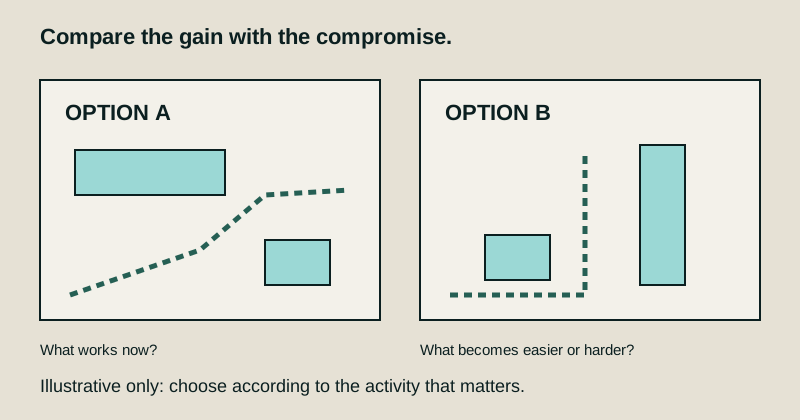
Compare two arrangements using the same questions
Make a small sketch of the current arrangement and one alternative. Keep the furniture list the same so you can understand the effect of placement before deciding whether to buy anything. The comparison below is illustrative, not a recommendation for every living room.
| Question | What to record |
|---|---|
| Does the priority activity become easier? | Describe the specific change; do not give an unexplained score. |
| What route changes? | Trace where people walk and where they may pause or detour. |
| Can the room still be used by everyone who needs it? | Ask about individual access and everyday use rather than assuming one arrangement fits all. |
| What is the trade-off? | Record the seat, opening, activity or view that becomes less convenient. |
Try the smallest useful change
You may be able to learn from changing a chair's angle or a small table's position before moving the whole room. Start with a sketch if moving the furniture would require help. Follow safe handling instructions and keep exits and required access clear.
Repeat the activity you identified at the start. Include normal use by the other people sharing the room where possible. A change that looks better from the doorway is not automatically easier to live with.
Keep a note of the original position if you may want to restore it. If a trial creates a new problem, undo it or revise the option rather than forcing the new layout to work.
If the room is long or narrow
A long or narrow living room often makes one problem more visible: the room may have enough total floor area while the useful route through it is concentrated along one direction. Instead of asking how to fill the whole length, trace the journeys that actually happen from door to seat, seat to storage and one end of the room to the other.
Then look at furniture depth as well as width. A sofa, cabinet or table can fit against a long wall while reducing the space available for movement in the part of the room people repeatedly cross. Moving every item against the walls can also leave the room technically open but awkward to use.
If different activities happen at opposite ends of the room, compare them as separate use areas rather than forcing one arrangement to solve every activity at once. Keep the route between them observable and test whether one area regularly spills into the other.
Do not rely on a universal clearance number as proof that an arrangement works. Observe the actual route, opening space and activity involved. If a dimension could change your decision, use the room-measurement guide and record the specific gap rather than measuring the whole room without a question in mind.
Recognize the limit of rearranging
Some rooms contain genuinely competing needs or constraints that placement alone will not solve. The result of a comparison might be “we need another measurement,” “we need to agree on the room's priority” or “this decision needs specialist advice.” That is still a more informed position than buying an item on impulse.
Use the observation checklist to compare the change with your original problem. This guide offers a way to reason about alternatives; it does not certify clearances, promise a complete redesign or provide access to the planned paid product.