
Start with the difficulty, not the sofa size
A large sofa is not automatically too large for a room. The useful question is whether its size and position interfere with an activity that matters to you.
Write down what actually happens. Do people turn sideways to pass it? Does a nearby door become awkward to open? Is another seat difficult to reach? Does the coffee table have to be moved whenever someone walks through?
Those observations give you more information than deciding that the sofa simply looks big.
Physical fit and usable fit are different
A sofa may fit between two walls while still consuming space needed for movement or another activity. Its measured footprint describes the object itself; it does not describe everything that must happen around it.
Consider the route beside or behind the sofa, the space used when someone sits down or stands up, nearby doors and drawers, and any activity that shares the same part of the room.
If the sofa fits on paper but the whole room still feels cramped, read why a room can feel crowded even when the furniture fits.
Check whether position is the problem
Before assuming the sofa needs replacing, ask whether its orientation or location creates the conflict. A small change in angle or position can alter a walking route without changing the amount of furniture in the room.
Where practical and safe, sketch another position or test a modest reversible move. Repeat the same activity afterward and compare what became easier and what became harder.
Look for conflicts around doors and routes
A sofa near an entrance can make the room feel constrained even if there is empty space elsewhere. Watch what happens when someone enters, leaves or crosses the room in normal use.
If the main difficulty is concentrated around an opening, use the guide to checking furniture around a doorway before treating the sofa itself as the only cause.
Measure only what can change the decision
If you are deciding whether a different sofa would help, record the dimensions that matter to that decision: the current sofa footprint, the relevant route or gap, and any door or furniture movement that overlaps it.
Do not rely only on showroom appearance or the advertised seat count. For a possible replacement, use the manufacturer's actual dimensions and check delivery constraints separately.
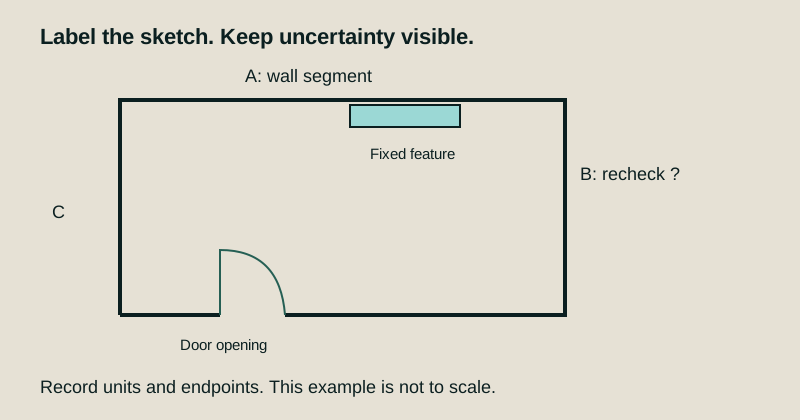
The room-measurement guide shows how to record openings, furniture and uncertain dimensions without pretending the sketch is a certified floor plan.
Check the trade-off before replacing anything
A smaller sofa may recover floor space, but that does not automatically make it a better choice. It may provide less seating, change how the room is used or leave another constraint unresolved.
Compare the problem you started with against the likely gain and the compromise. If moving the current sofa solves the difficulty, size may not have been the main issue.
When the sofa is only one part of the problem
If several routes, openings or activities remain difficult after you isolate the sofa question, the room may have a broader layout conflict. Use the room-layout diagnostic guide or try Livometry Space Check to work from the problem you observe rather than guessing which object is responsible.