
Separate three different fit questions
- Delivery fit
- Can the packaged or assembled item reach the room through entrances, stairs, lifts and turns?
- Physical fit
- Can the item occupy the intended floor area without overlapping fixed features?
- Usable fit
- After the item is placed, can people still walk, open doors, use storage and perform the activities that matter?
Passing one fit test does not guarantee the others.
Use the manufacturer’s real dimensions
Record the product’s width, depth and height from the manufacturer or seller, including relevant projections. If the item has a chaise, reclining section, extension leaf, open door or other moving part, include the dimensions that apply in use.
Do not infer scale from product photography.
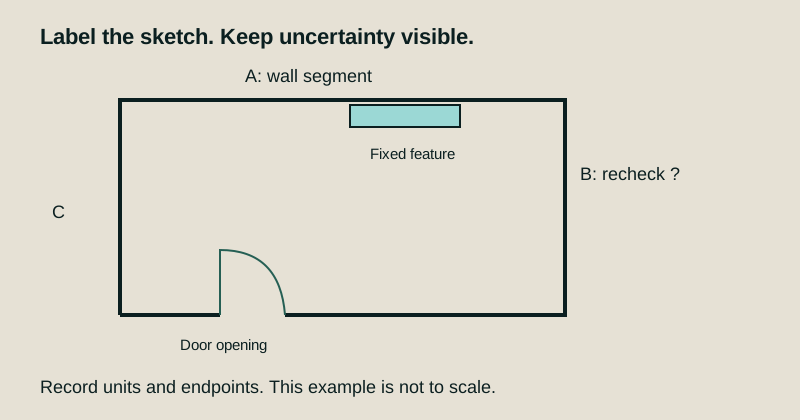
Measure the intended position
Measure the specific wall segment, floor footprint, opening or route that could prevent the item from working. Add fixed obstacles such as radiators, built-ins or door swings to the sketch.
Use the room-measurement guide if you need a simple way to label those dimensions and uncertainty.
Check the item in use, not only at rest
A chair moves when someone sits. A table needs room around the seats. A cabinet or drawer unit changes footprint while open. A sofa may affect the route behind or beside it.
Sketch or mark the active-use area that matters for the product you are considering.
Treat delivery as a separate path
The item may fit perfectly in its final position but fail to reach that position. Check doorways, stairs, lifts, corners and other delivery constraints using the supplier’s handling information.
Confirm uncertain delivery requirements with the seller or delivery provider rather than assuming that room fit guarantees access.
Compare the new item with what it replaces
If you already own a similar item, record what the proposed furniture changes: more depth, a wider arm, a different orientation, another opening mechanism or a larger active-use area.
This comparison helps you focus on the dimensions that actually change the room.
Do not buy to solve an unverified explanation
If the room currently feels crowded or awkward, first test whether the existing furniture’s position is responsible. A smaller replacement can be expensive without resolving the underlying route or activity conflict.
Use Livometry Space Check or the relevant room guide to understand the problem before treating a purchase as the solution.