
Start with what actually goes wrong
Instead of beginning with a new arrangement, describe one moment when the room does not work as you want it to. You might have to turn sideways between a chair and table, move something before opening a cupboard, interrupt another activity to walk through the room, or repeatedly shift an object out of the way.
That description is more useful than saying the room simply feels wrong. It gives you something observable to compare before and after a change.
Check four different kinds of constraint
A layout problem can come from several different places. Furniture footprint matters, but so do the routes people actually use, the extra space required when doors, drawers and chairs move, and activities that compete for the same part of the room.
| Possible constraint | What to observe |
|---|---|
| Furniture footprint | Is too much floor area concentrated where the room needs to work hardest? |
| Walking route | Do people detour, turn sideways or cross through another activity? |
| Opening and use space | What changes when a door, drawer, chair or movable part is actually used? |
| Competing activities | Does one useful setup interfere with another activity at a different time? |
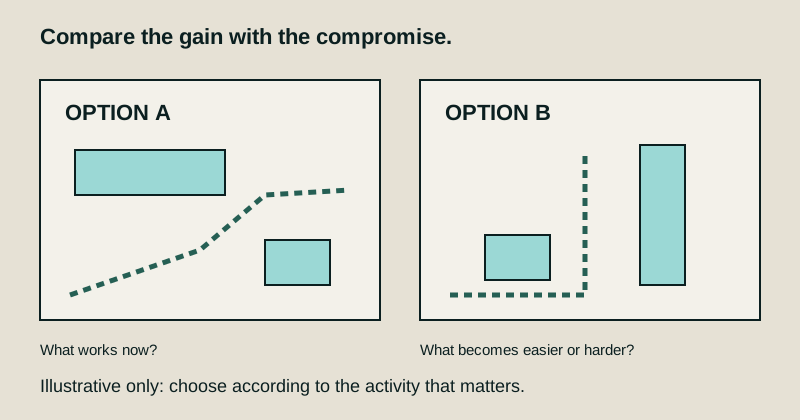
Why furniture can fit and the layout can still fail
Room dimensions tell you whether an object can occupy a location. They do not by themselves tell you whether people can comfortably use the room around it. A chair may fit beside a table while leaving an awkward route behind it. A cabinet may fit against a wall while its open door blocks the place where someone needs to stand.
This is why replacing furniture is not automatically the first answer. The problem may be position, orientation, access or timing rather than the size of the object itself.
Test one reversible change
Choose the constraint that best matches the problem you observed and change one thing where practical. Rotate a chair, move a small table, clear a temporary obstruction or test a different route before attempting a full-room rearrangement.
Then repeat the same activity. Record what became easier and what became harder. If you change several things at once, it becomes difficult to know which change produced the result.
Use appropriate help for heavy furniture, keep required exits and access clear, and do not treat an informal layout test as a structural, accessibility or fire-safety assessment.
Measure only when the measurement can change the decision
If two options appear equally plausible, a measurement may resolve the uncertainty. Measure the gap, opening or furniture dimension that would actually change your choice rather than measuring the entire room without a question in mind.
If you are still unsure which constraint matters most, Livometry Space Check can help you work through one room problem and identify a useful first change to test.
A useful result is a clearer next decision
The goal is not to discover one perfect arrangement. A useful result may be that one placement improves the priority activity, that another measurement is needed, that two household activities genuinely compete for the same space, or that the furniture itself is not the main problem.
That information helps you avoid making a purchase or permanent change before you understand what the room actually needs.