
Start with what actually feels wrong
Do not begin with a rule about how large a coffee table should be. Start with the difficulty you notice. Do people turn sideways around a corner? Does someone repeatedly move the table to reach a seat? Does the route between the sofa and doorway become awkward?
A table that simply looks large is a different question from a table that interferes with normal room use.
Separate reach space from walking space
A coffee table usually sits close enough to seating to be useful, but that same position can conflict with a route through the room. The question is not only whether the table fits between the sofa and another object. It is whether people can use the seating and move through the room without repeated negotiation.
Observe where feet, knees, chair movement and walking routes overlap with the table's footprint.
Look for a pinch point
A coffee table can make an otherwise workable living room feel cramped when one corner narrows a frequently used route. Empty floor elsewhere does not remove that local conflict.
If several pieces are contributing to the same narrow route, use the crowded-room guide to separate the symptom from the possible cause.
Test position before assuming the table is too large
Where practical, move the table slightly and repeat the activity that was difficult. A change in position may improve the route without changing the furniture itself.
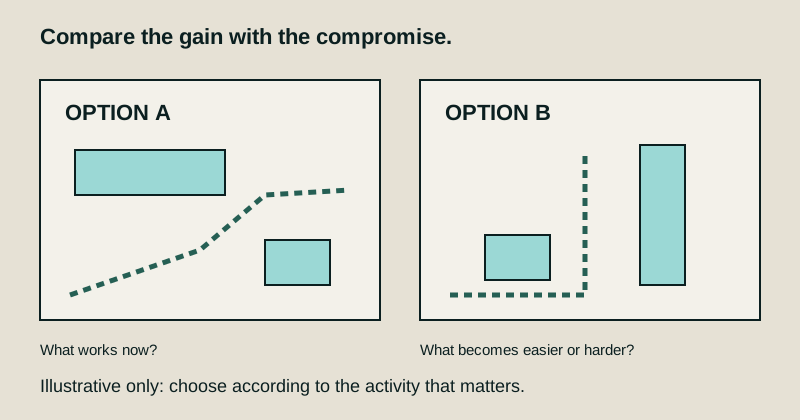
Then check the trade-off. Moving the table farther from the walkway may make it less convenient to use from the sofa. The useful result is not simply more empty floor; it is a better balance between the activities that matter.
Check whether shape is part of the problem
Two tables with similar overall size can behave differently in the same room because their edges and corners interact differently with walking routes. A corner that projects into a path can matter more than unused space on another side.
That does not mean one shape is universally better. Compare the conflict you actually have with the footprint and orientation you are considering.
Measure only what could change your decision
If you are considering a replacement, measure the current table and the specific route or gap that is causing concern. Keep the original measurement and mark uncertain values instead of guessing.
For a possible purchase, use the manufacturer's actual dimensions. A product image or stated seating style does not show how the table will interact with your own route through the room.
When the coffee table is not the real problem
If moving or temporarily removing the coffee table barely changes the difficulty, the wider layout may be responsible. The sofa position, another piece of furniture, a doorway or competing activities may be creating the same bottleneck.
Use the room-layout diagnostic guide or try Livometry Space Check to work from the observed problem rather than assuming the coffee table is responsible.