
Choose one pattern you can observe
Pick a small recurring group: keys by the door, papers at the end of the table or frequently used supplies beside a chair. Start with one group rather than attempting to explain every object in the room.
Notice when the group appears, who uses it and what happens immediately before and after. Some objects may be waiting for an unfinished task rather than lacking a place to live. Ask the people involved before moving their belongings or deciding what they should discard.
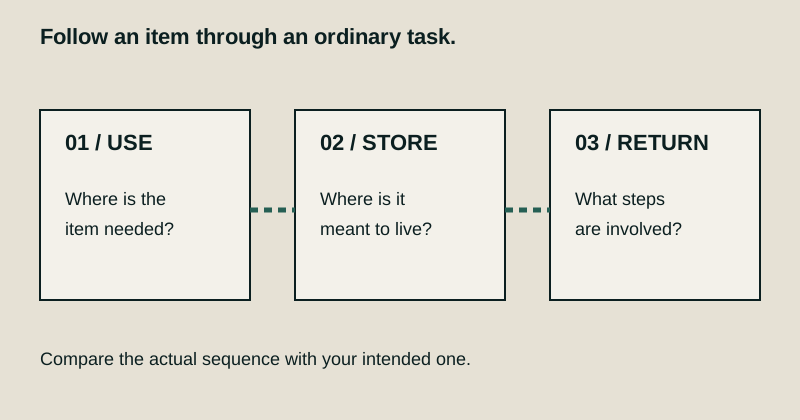
Follow use, storage and return
- Use: Where is the item needed? What activity is it part of?
- Storage: Where is it meant to go? Can it be reached and recognized when needed?
- Return: What must happen to put it away? Does another object need moving, a container opening or a trip to another room?
Write down the actual sequence rather than the sequence you wish happened. In the illustrative example, returning supplies involves crossing the room and opening two containers. That may or may not explain a nearby pile; the drawing identifies a question to test, not a proven cause.
Compare different explanations
- Capacity
- The intended location may genuinely be full. Look at the space available and the items that need it.
- Access
- There may be room inside, but another object makes it difficult to reach or open.
- Return effort
- A storage system may require more steps than the activity comfortably allows.
- Unfinished work
- An item may need a temporary place while a task is in progress. Permanent storage might not address that need.
- Shared expectations
- Different people may not agree on where something belongs or when it should be put away.
More than one explanation can apply. Do not assume that buying a larger container will solve a problem of access or an unfinished task.
Test a small adjustment
Agree on one change with the people using the space. You might make the existing location easier to reach, reduce an unnecessary container step or designate a temporary place for an in-progress task. Use what you already have for an initial trial where practical.
Observe several ordinary uses. Did the item return more often? Did the change block another activity or move the pile elsewhere? Decide what “better” means for this household rather than aiming for a photograph of an empty surface.
Keep sensitive documents, medicines, sharp objects and other items with special storage needs in appropriate storage. Convenience is not a reason to ignore their specific requirements.
Review without blame
If the pattern stays the same, revise the explanation. The trial may have addressed the wrong part of the sequence, or the storage arrangement may not fit everyone's needs. A useful next step might be a conversation, a clearer task boundary or a different observation.
This is a practical observation exercise, not a clinically validated method or a diagnosis of behavior. Use the checklist to record what you noticed and what changed. You do not need to disclose personal circumstances to use it.